Treatment for Adults with ADHD
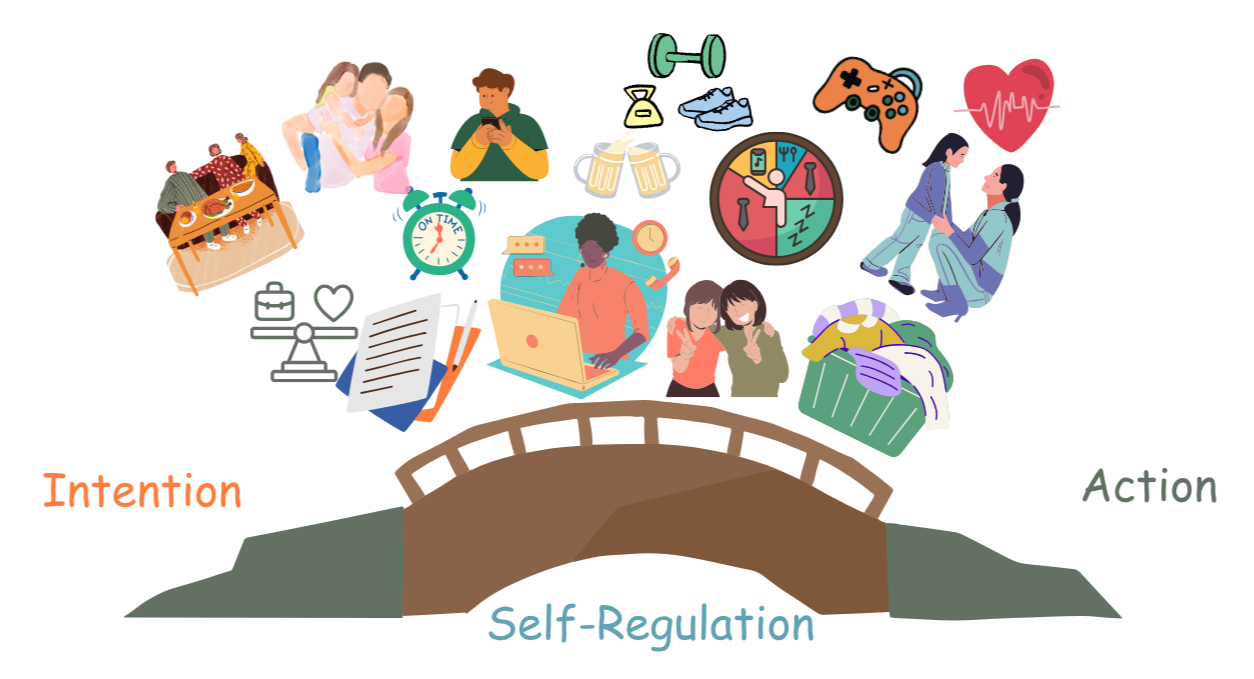
Why Does ADHD Feel like a Broken Bridge?
Think of ADHD as a challenge that arises on the bridge between knowing what to do and actually doing it. On one side of the bridge is the goal/challenge, and everything you understand—your goals, values, intentions, and plans. On the other side is achieving the goal or resolving the challenge, which involves real-world execution—showing up on time, following through, finishing tasks, organizing your day, and regulating emotions when things get stressful. For people with ADHD, the breakdown doesn’t necessarily happen because they don’t care or don’t understand the goal; it can happen on the bridge itself, where self-regulation and executive functions are supposed to carry you from intention to action. That bridge is crowded with competing demands—distractions, emotional reactions, boredom, delays in reward, and the intangibility of time—all of which can pull you off course!
At its core, ADHD can be thought of as a difficulty with self-regulation: using your executive functioning skills to steer your actions, emotions, and focus so you can work toward your goals, particularly the ones that take time. This is why behavioral interventions at home and in school are the most strongly supported non-medication treatments for childhood ADHD: when self-regulation is impaired, the environment becomes a very powerful lever for change! Parents and teachers can adjust routines, expectations, and reinforcement systems to compensate for these difficulties. In adulthood, this all becomes more challenging because the external supports that naturally surround children are far less available. Adults face higher demands for self-regulation and fewer built-in structures—no bus that arrives each morning, no parent to prompt wake-ups, no teacher overseeing work completion!
Why Cognitive-Behavioral Therapy (CBT) for Adult ADHD?
The most strongly supported recommendation for management of ADHD in adulthood is medication paired with CBT specifically adapted for ADHD. Medication can help stabilize the “bridge,” improving capacity for executive functioning, and CBT can provide the guardrails, cues, and routines that help adults navigate the bridge successfully, turning knowledge and intention into consistent, real-world action. CBT for adult ADHD is a structured, skills-based psychotherapy adapted specifically to target these self-regulation and executive-function problems. It’s not just "talking about feelings" (although we do discuss emotions!)—instead, it teaches practical tools and strategies to compensate for the brain-based challenges ADHD creates.
What is CBT for Adult ADHD?
Let’s start with what CBT for Adult ADHD is not.
1. CBT is not a cure ADHD on its own. CBT is not a standalone “cure” for ADHD, but research shows that it can meaningfully improve day-to-day functioning for adults with ADHD. Medication remains a highly effective treatment, and for many adults, combining medication with CBT for adult ADHD offers the strongest and most comprehensive benefits.
2. All CBT protocols are the same. Research consistently shows that CBT must be adapted for adult ADHD to be effective. Unlike other CBT protocols, ADHD-focused protocols include skills-based components such as time-management, planning, reducing distractibility, organizing tasks and materials, and addressing ADHD-specific thinking patterns. These elements are considered central to the improvements seen in randomized controlled trials, where adults benefit most when CBT targets the executive-function and cognitive challenges unique to ADHD. In short, CBT is not automatically ADHD-appropriate simply because it is CBT—the specific, tailored protocol matters.
3. CBT is risk-free for people with ADHD. In practice, if CBT is not well adapted or if the treating provider lacks ADHD expertise, some adults may feel misunderstood and overwhelmed.
4. More sessions is better. Research doesn’t support the idea that simply adding more CBT sessions leads to better outcomes for adult ADHD. What appears to matter more is the quality of the intervention—specifically, how well the CBT is adapted for ADHD—rather than the total number of sessions. Consistent progress tracking also plays an important role; using standardized rating scales throughout treatment helps monitor change and ensures the approach is continually refined to fit the person’s needs.
5. CBT Is a Permanent Cure-All. The reality of long-term success rates is more nuanced: while short-term studies and several follow-up trials show promising and sometimes sustained benefits, there is still a scarcity of robust long-term data, especially beyond one year. Long-term ADHD research is challenging—people’s lives change, maintaining follow-up is difficult, and it’s hard to attribute outcomes to any single intervention. Most existing studies also come from Western countries, limiting how broadly the findings can be generalized. For now, the evidence base is encouraging but still developing, and researchers consistently note the need for more long-term, diverse studies.
6. CBT only changes “negative thinking” in ADHD. Not quite! Research and clinical experience show that ADHD often involves thinking patterns that aren’t strictly negative—they can be overly optimistic or impulsively confident, yet still unhelpful in the long run. For example: “I’ll do better if I wait until the last minute,” “I have plenty of time to finish this one task first,” or “I can’t stop right now.” CBT for ADHD addresses these patterns too, helping people recognize how such thoughts influence behavior and develop strategies to manage them effectively.
So what is CBT for adult ADHD?
CBT for adult ADHD is a structured, skills-oriented psychological treatment designed to build practical systems, reshape ADHD-related beliefs, improve emotional functioning, and strengthen executive-function workarounds so adults with ADHD can function more effectively in their daily lives.
1. A skills-based treatment targeting executive-function problems. CBT for ADHD teaches practical, compensatory strategies for challenges like time management, planning and prioritizing, breaking tasks into manageable steps, organizing physical and digital spaces, reducing distractibility, overcoming procrastination, and problem-solving. These strategies are called compensatory because they don’t “fix” the underlying ADHD—they provide alternative routes to success. Think of it like building the bridge: if the natural path is blocked, CBT for adult ADHD can help you construct a sturdy bridge to get across.
2. A therapy that combines behavioral strategies with cognitive strategies. CBT for ADHD addresses both: behaviors (e.g., using planners, setting cues, establishing routines), cognitions (e.g., challenging unhelpful ADHD-related beliefs like “I do my best work at the last minute,” or “There’s no point starting unless I can finish perfectly”). Adults with ADHD can become highly self-critical, especially when they know what they should do but consistently fail to apply that knowledge when they need it most. This can lead to thinking patterns like “I’m lazy” or “I’ll never get this right”, which are not only discouraging but also reduce motivation and increase stress. Many adults rely on harsh self-criticism as a way to push themselves, but research shows that this is usually counterproductive. CBT for adult ADHD helps identify these patterns and develop more realistic, supportive ways of thinking—ones that make it easier to act on intentions without spiraling into shame or frustration.
3. A treatment usually delivered in a structured, session-by-session format. CBT for ADHD is usually highly structured, manualized or semi-manualized, goal-oriented, and homework-based. Skills are taught and practiced repeatedly until they become automatic—what psychologists call overlearning. Studies suggest that this structured, repetitive practice is key for adults with ADHD, whose executive functioning challenges make spontaneous habit formation less reliable.
4. A therapy that directly targets emotional and motivational difficulties. Beyond organization and planning, CBT for adult ADHD often includes sessions on emotional regulation, frustration tolerance, shame and self-criticism, low self-esteem, anxiety, depression, and motivation. Research shows that addressing these emotional and motivational factors can be important, as they frequently co-occur with ADHD and strongly influence day-to-day functioning.
5. A therapy focused on functional improvement, not necessarily symptom elimination. The primary goals are improved: follow-through, work consistency, organization, relationships, daily functioning, flexibility to bounce back from setbacks, self-management. Symptoms may improve, but the functional gains are often the most meaningful. Collaborative care—working alongside psychiatry when medication is indicated—can enhance outcomes, as research suggests that combined behavioral and pharmacological strategies often yield the best real-world improvements.
For more ADHD resources (for children and adults), please check out the resources page! These tools are designed to help you explore strategies and determine what may work for you. Many people discover that these tools are enough to start managing symptoms more effectively. Several are free, and all rely on evidence-based approaches.
If you are searching for a psychologist who specializes in CBT for adult ADHD, Dr. Lauren Oddo provides CBT for adult ADHD (in addition to assessment and cognitive and behavioral treatment for ADHD across the lifespan, starting in early childhood). For questions or to schedule an appointment, please feel free to contact her directly.
Licensed Clinical Psychologist
Email: loddo@richmondfamilypsychology.com
Phone: 804-214-6412